Ask any North Indian bride what kind of jewellery she wants for her wedding and the word “polki” comes up within the first thirty seconds. Ask her to explain what polki actually is, and the confidence drops significantly. This is not the bride's fault. It's how these words get used — as aesthetic descriptors rather than actual definitions. So here it is, plainly.
What Polki Actually Is
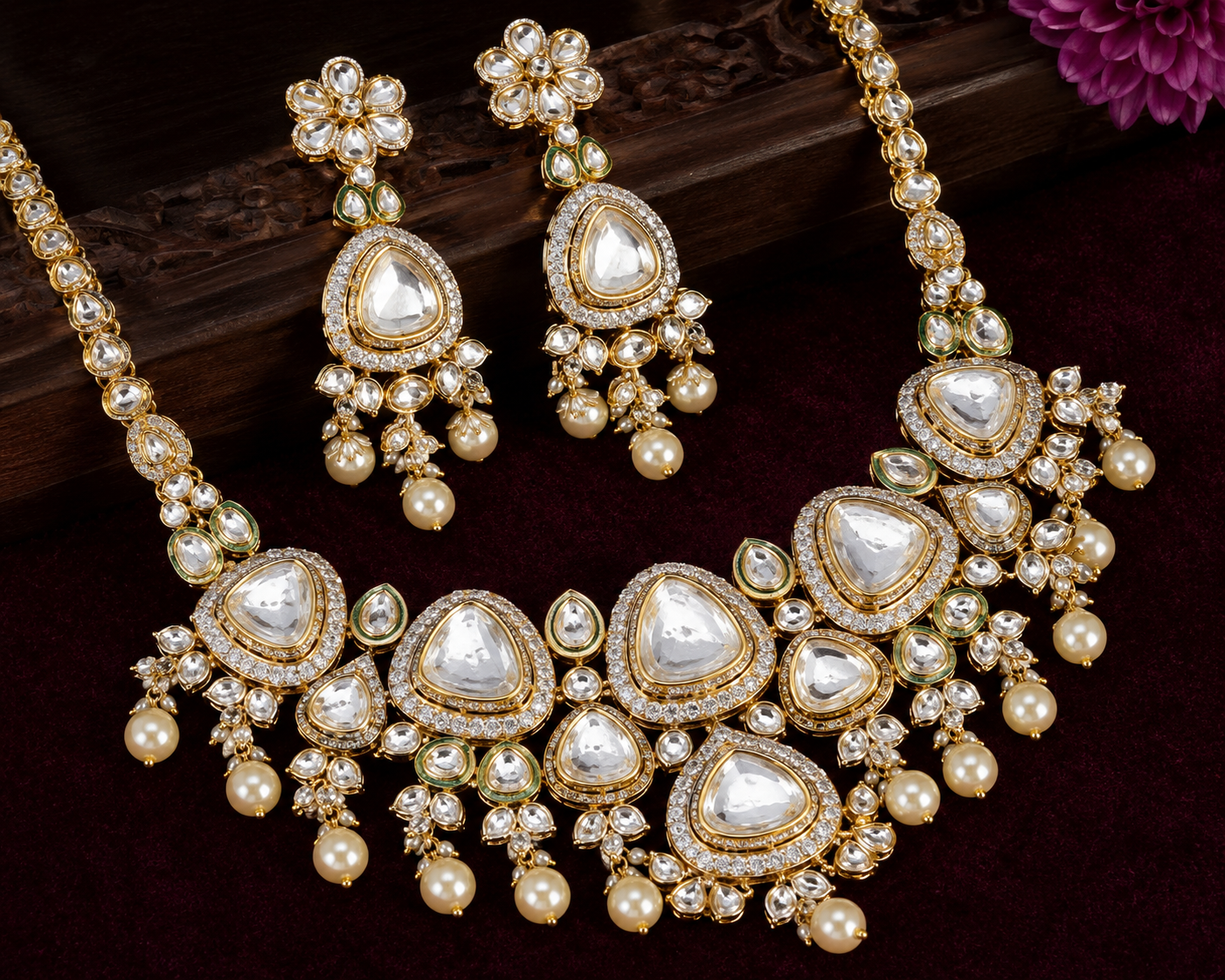
Polki is uncut diamond. Diamond in its natural, unprocessed form — before it has been shaped into the precise faceted cuts of what we conventionally call diamond jewellery. Uncut diamonds are irregular. Each stone is different — different shape, different surface, different way of sitting in light. When set in jewellery, the effect is less sharp sparkle and more warm glow: a deep luminescence that comes from the natural surface of the stone rather than from engineered light reflection.
The setting for polki is kundan — a technique using pure 24-carat gold foil to hold the stones in place without conventional prongs or claws. The foil wraps around each stone so the stones appear to float in gold. This is why polki has that characteristic warmth — it is the combination of uncut stone and real gold that produces it.
What Kundan Actually Is
Here is where the confusion lives. Kundan technically refers to the setting technique — the pure gold foil method — not a type of stone. But in common usage, “kundan jewellery” has come to mean pieces that use the kundan setting technique with glass or semi-precious stones rather than diamonds. Same setting. Different stone. Visually very similar. Significantly different price.
A well-made kundan set can look as rich and as traditional as polki at a fraction of the cost. This is not a compromise. For many brides, it is the intelligent choice. At Wedding Syrup exhibitions, both sit side by side at the jewellery stalls — the comparison that is impossible to make from photographs becomes immediately clear when the pieces are next to each other in person.
What Diamond Jewellery Means in This Context
When brides talk about diamond jewellery as distinct from polki, they usually mean cut and polished diamonds in white gold or platinum settings — the contemporary form with high sparkle and precise geometry. Where polki glows warmly, cut diamonds flash. Where polki feels rooted in centuries of Indian craft tradition, contemporary diamond jewellery reads as modern and international. Neither is more right than the other. They are genuinely different answers to different questions about what you want your wedding to look like.
The Question That Actually Decides It
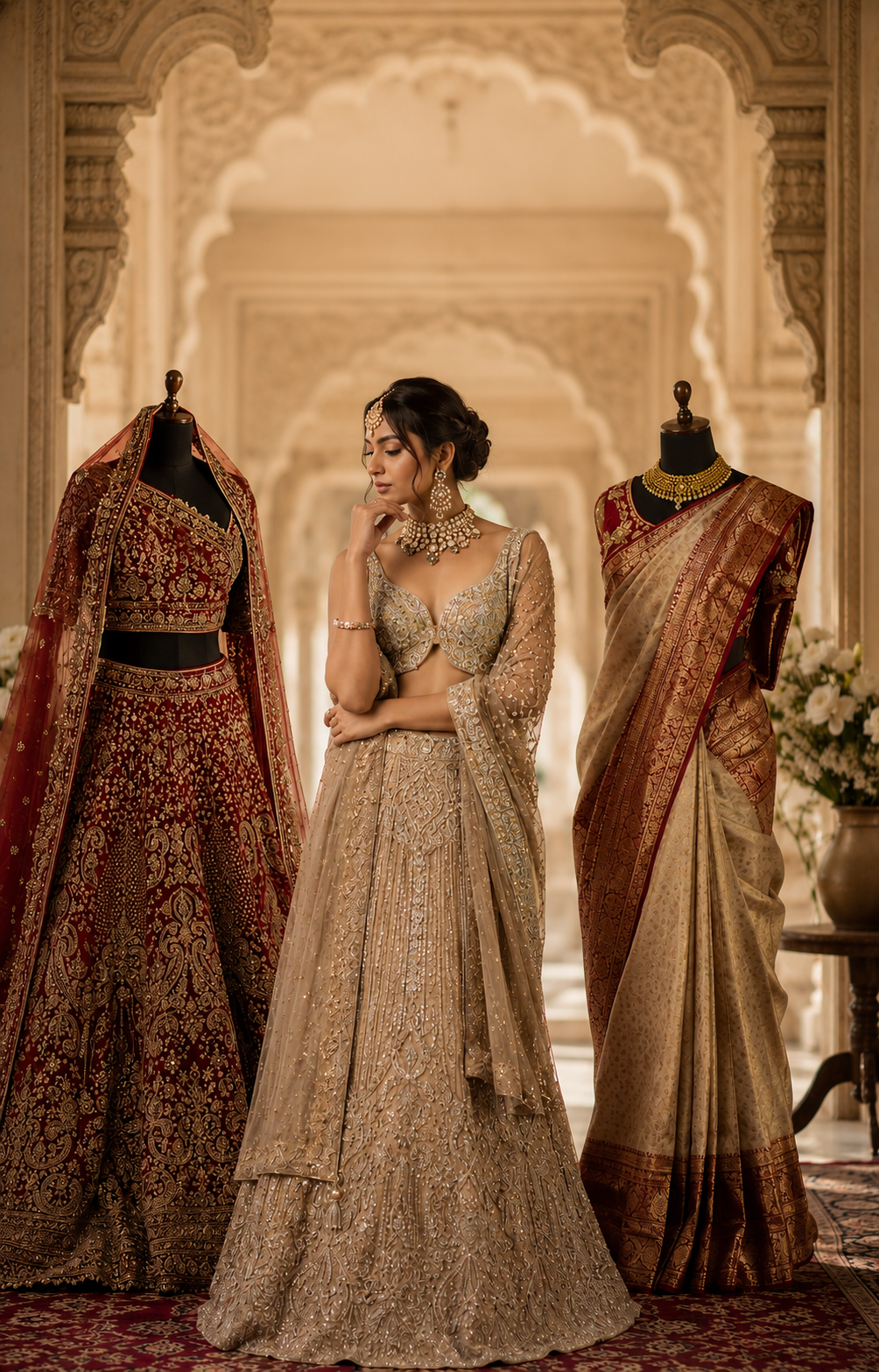
Forget the stones for a moment. The real question is: what does your lehenga look like? A heavily embroidered lehenga needs jewellery that complements rather than competes. Polki and kundan, with their warm glow, sit comfortably alongside heavy embroidery. A lehenga with minimal embellishment gives jewellery more space. The jewellery stalls at Wedding Syrup exhibitions across Delhi, Gurugram and Chandigarh carry all three categories — and the exhibitors are experienced enough to have this conversation with you in person, with the pieces in hand.
One Detail Worth Knowing Before You Buy
Ask to see the back. Quality polki and kundan jewellery often has meenakari on the reverse — enamel work in bright pinks, greens and blues on the gold backing, visible only to the wearer. It is a small, private detail that has existed in Indian jewellery making for centuries. If a vendor at a Wedding Syrup jewellery stall shows you genuine meenakari on the back, you are looking at something made with real attention. If the back is plain or finished carelessly, that tells you something too.
Polki is not for every bride and not for every aesthetic. But if something in the warmth of it — in the irregularity and the centuries of craft behind it — feels right for who you are and what your wedding means, then understanding what you are actually looking at will make the decision both easier and entirely your own.
Discover it in person at Wedding Syrup
Free entry at our exhibitions across Delhi, Gurugram, Chandigarh, Lucknow, Indore and more.